


I
Introduced
16,565measures introduced
Any member can introduce a bill. It gets a number, a sponsor and a committee, and its record begins.
Federal Policy Analysis for the Public
Between the BillsExplore
An interactive examination of the institutions, decisions, and legislation shaping American life.
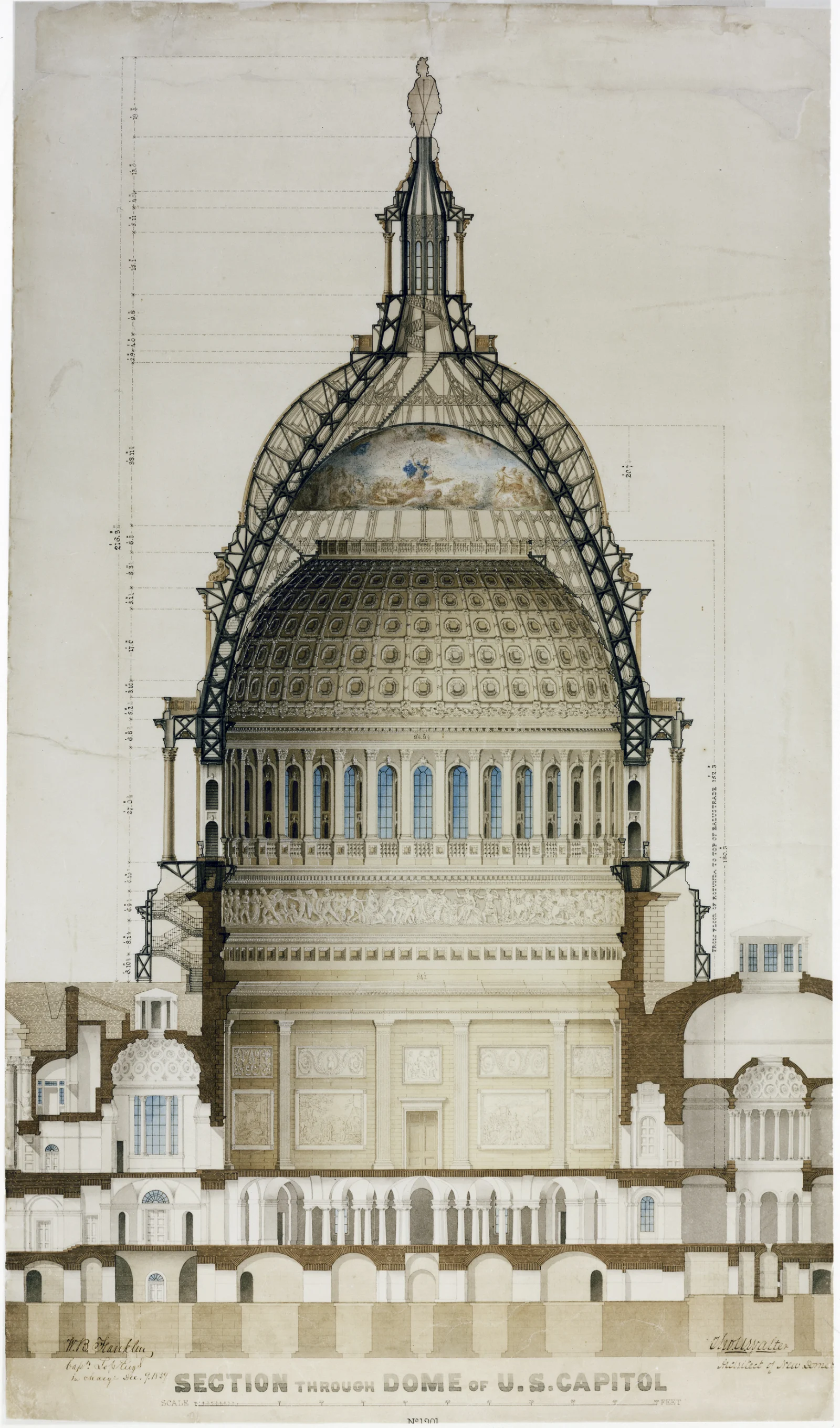
Thomas U. Walter, Section through dome of U.S. Capitol, 1859. Library of Congress. Public domain.
The route
Follow the line. It runs through the five places a bill has to pass, with the count of the 118th Congress’s 16,565 measures that got there.
I
16,565measures introduced
Any member can introduce a bill. It gets a number, a sponsor and a committee, and its record begins.
II
2,13812.9% of all measures
Committees decide what moves. A hearing, a markup or a report is the first sign a bill is alive.
14,224 were referred and never acted on.

III
9625.8% of all measures
Leaders choose what reaches a vote. Passing one chamber gets a bill halfway.
1,379 got committee attention and never passed a chamber.
IV
2901.8% of all measures
Then it starts again on the other side of the Capitol, where the calendar and the rules are different.
672 passed one chamber and never passed the other.
V
2741.7% of all measures
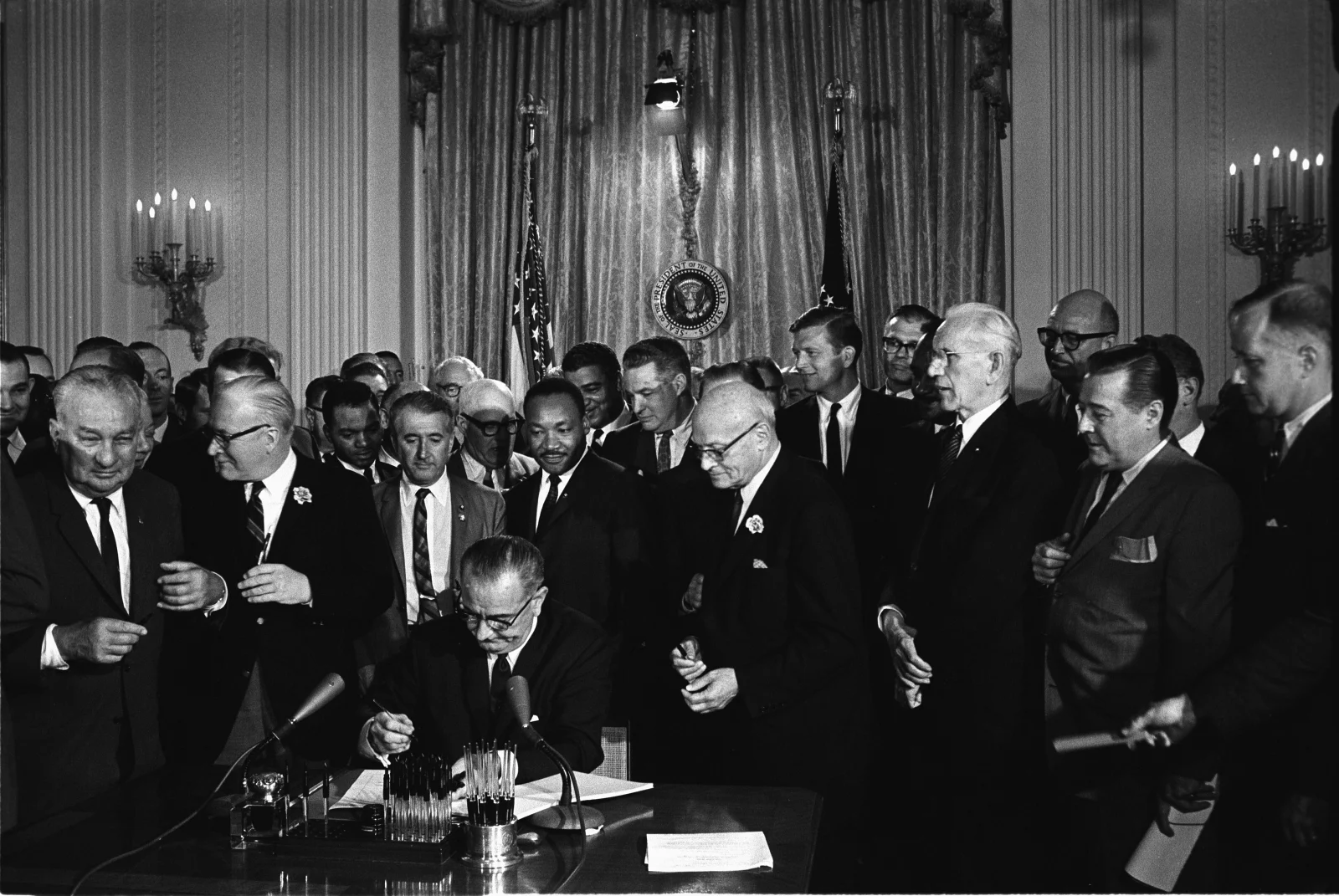
A signature makes it law. A veto sends it back, where it usually stays.
13 were vetoed.
274 of 16,565. The other 16,291 are still on the record, wherever they stopped.
The collections
Each collection covers one part of American government, built from its official record. Congress opens first; the others are being built now.
Try it
Each press draws a real measure from the 118th Congress, at random, and shows how far it got. Keep pressing. It takes a while to see a law.
118th CongressH.R. ____
A bill to be named. Press the button to draw one from the record.
Read its record on Congress.govCollection I / Congress
Investigation 001 Open now
An interactive investigation into the legislative graveyard.
Explore the investigationInvestigation 002
Does bipartisan sponsorship change a bill’s odds of becoming law, and in which policy areas?
In development.
Investigation 003
How has legislative activity changed from one Congress to the next?
In development.
Investigation 004
Which committees advance legislation, and which rarely do?
In development.
Investigation 005
How do legislative priorities vary across states and congressional districts?
In development.
Every number has a source.
Counts come from the Library of Congress’s Bill Status records, published by GovInfo. Each investigation links the files it used and lets you download the rows.
Definitions come first.
“Died in committee” and “passed” mean specific things in the record. We say which actions we count before we count them.
A pattern is not a cause.
When two things travel together in the data, we report it as a pattern and say what it cannot show.


